Watches
Hamilton Khaki Field King Review: Affordable Military Precision
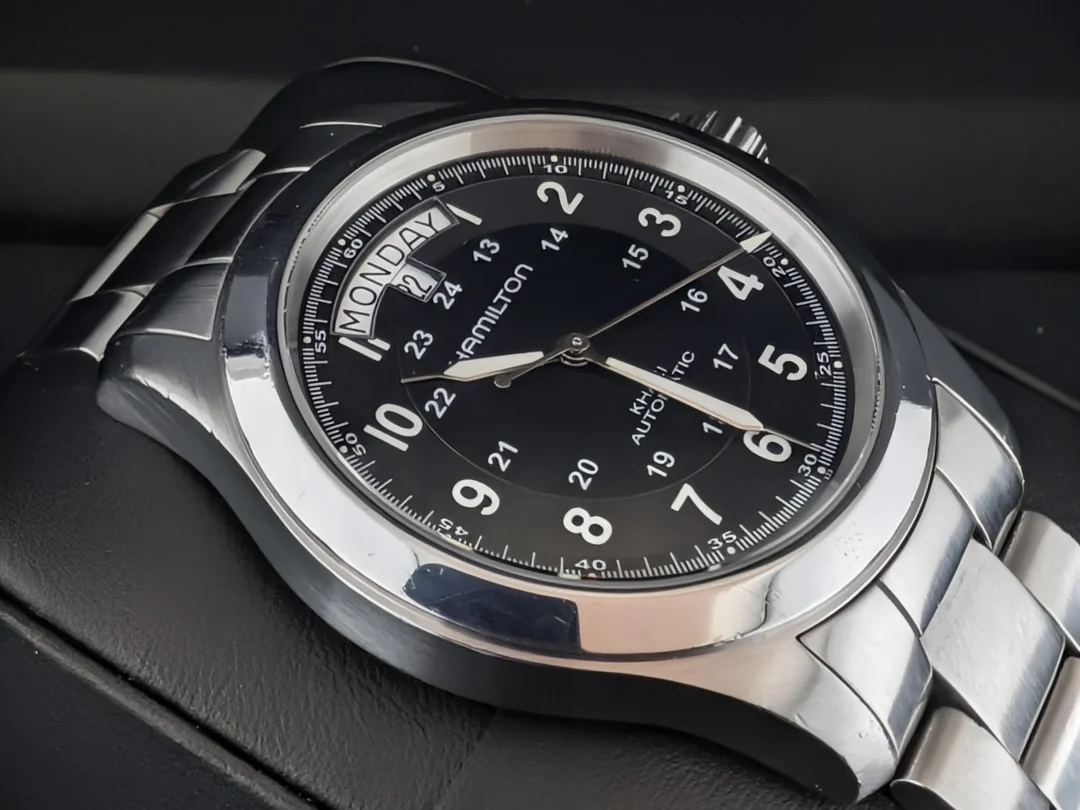
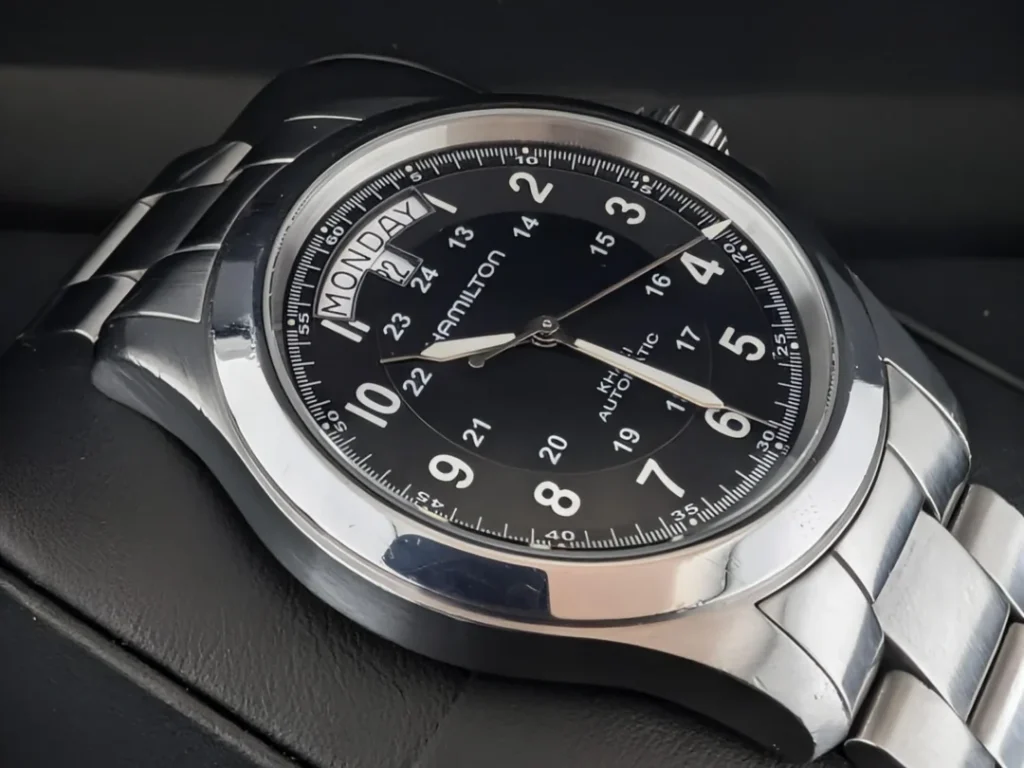
A field watch has one job, tell the time clearly, survive whatever the day throws at it, and not ask to be babied, and the Hamilton Khaki Field King Auto does that job better than watches costing twice as much. It’s the rare piece that looks just as at home under a dress shirt cuff as it does knocking around a garage, which is exactly the point of the category it comes from, and after wearing it regularly, it’s become the watch reached for on days when the others feel like they’re trying too hard.
The Hamilton Story.
Hamilton started in Lancaster, Pennsylvania in 1892, and for the first half of its life it was as American as a watch brand could be, known for railroad-grade accuracy before it ever touched a battlefield. That changed in 1914, when the U.S. military took notice of Hamilton’s precision and brought the company on as a contractor, moving it from pocket watches into the wristwatches soldiers actually needed. World War II is where the relationship became foundational rather than incidental: in 1942, Hamilton stopped making consumer watches entirely and spent the next three years supplying the military instead, delivering more than a million watches by the time the war ended, with the Caliber 987 movement chosen to power watches issued across the armed forces and the Navy alone receiving over 10,000 Hamilton marine chronometers. The company earned five Army-Navy “E” Awards for manufacturing excellence in that stretch, and kept issuing watches through Korea and Vietnam after it. Hamilton is Swiss-made today, part of the Swatch Group, but the Khaki Field line now on the wrist is a direct descendant of that original soldier’s watch, not a costume built to look like one.
The watch itself.
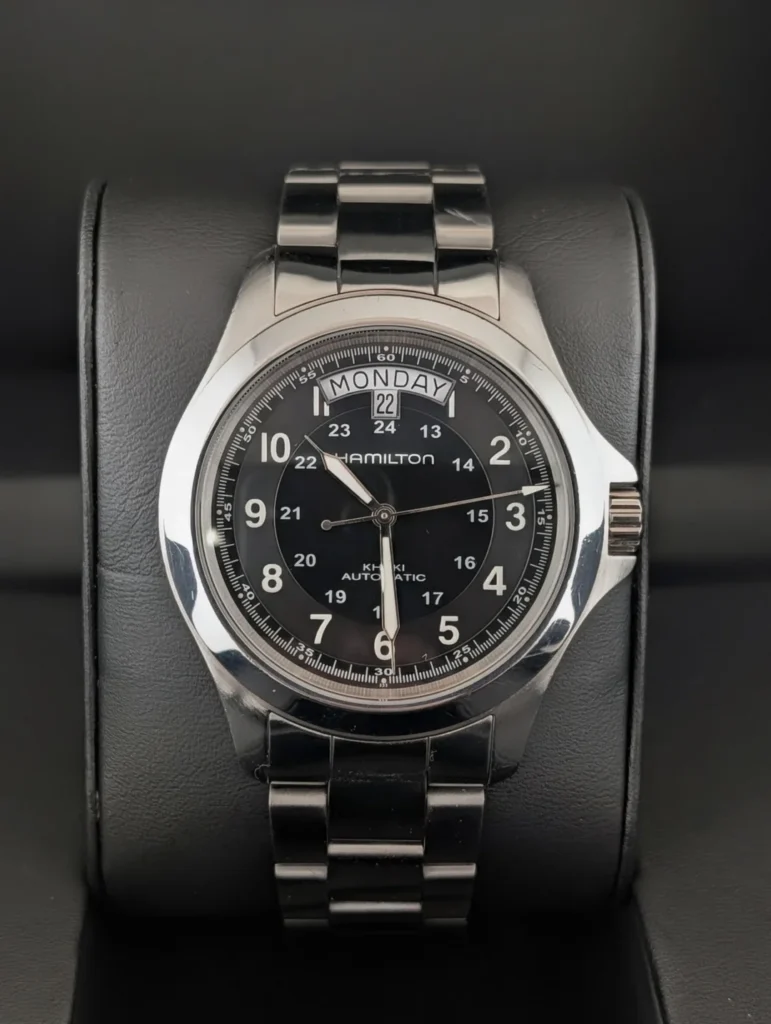
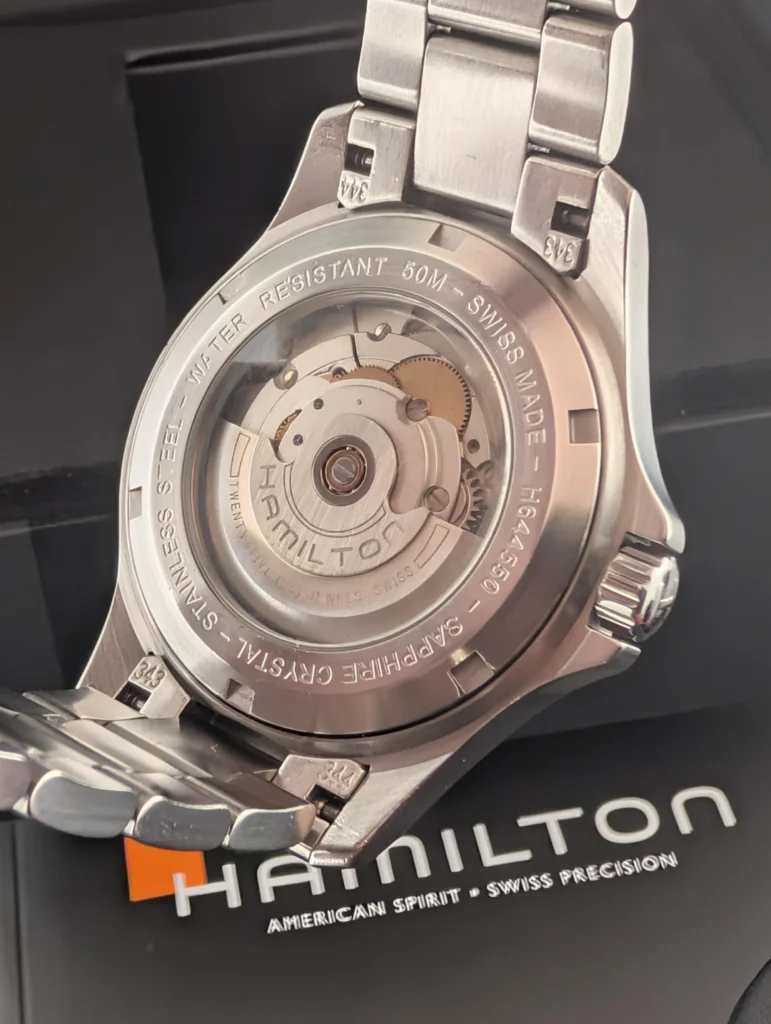
The King Auto runs a 40mm stainless steel case at 11.15mm thick, thin enough to slide under a cuff without a fight, with a sapphire crystal that shrugs off the scratches a beater watch actually needs to shrug off. Inside is the Caliber H-40, Hamilton’s version of the Powermatic 80 architecture with a Nivachron balance spring for real resistance to magnetic fields, and an 80-hour power reserve that means the watch can come off Friday night and still be running, correctly, Monday morning, a genuine practical advantage over the 38-to-42-hour reserves still standard at this price. The black dial carries a day-date window and military time printed alongside the standard hours, an actual functional holdover from the watch’s service lineage rather than a styling flourish, and the crown sits behind its own built-in guards, protection that matters the first time a doorframe or a dropped tool would otherwise have found it. Water resistance lands at 50 meters, and the open case back means the movement is visible on the wrist rather than sealed away, a small transparency that a lot of watches this price don’t bother offering. It ships on a three-row steel bracelet with a folding clasp, and at $845, it undercuts what a lot of Swiss automatics with a fraction of this history are asking.
On the wrist, it wears light for an automatic, the 11mm case doesn’t stack up under a cuff, and the curved lugs pull the case down against the wrist rather than letting it sit flat despite a fairly long 50mm lug-to-lug. The steel bracelet that comes standard is sturdy rather than refined, a simple push-button release on both sides of the clasp, exactly what a field watch’s bracelet should be. The lugs are drilled for standard spring bars, though, so the bracelet is genuinely optional: 20mm is about as universal as lug widths get, and swapping to a NATO, a canvas strap, or worn-in leather takes minutes and changes the character of the watch entirely, sportier and rougher on NATO or canvas, closer to a field jacket on leather. That range, sports bracelet to canvas to leather, is a real part of why it moves so easily between a workday and a weekend. One honest caveat worth knowing before buying on the bracelet specifically: fit out of the box is a mixed bag in owner reviews, some find the clasp needs a link adjustment or two before it sits right, worth trying on rather than assuming stock sizing will be perfect.
The competition.
Seiko’s newest 5 Sports Field Series lands at $385, its in-house Caliber 4R36 is simple and dependable, and a 41-hour power reserve is plenty for most people’s daily rotation. It doesn’t have Hamilton’s service record, the H-40’s nearly-double power reserve, or a sapphire crystal in place of Seiko’s usual mineral glass. Certina’s DS Action Day-Date Powermatic 80 runs $755 to $850 depending on the exact reference and draws on the same broader ETA-based Powermatic 80 architecture under the Swatch Group umbrella, a sportier DS case design against Hamilton’s military pedigree. Longines’ Master Collection sits in a different tier entirely, the current 40-41mm stainless steel automatics run $2,550 to $2,750, a genuine step up in classic dress-watch polish, a silicon balance spring, domed sapphire, curved lugs, the kind of old-world detailing Longines has built its whole reputation on. What the Hamilton offers instead is a direct, unbroken line back to an actual issued military watch, at roughly a third of the price.
What actually makes it a field watch.
The field watch as a category traces back to the trench watches of World War I, when officers strapped pocket watches to their wrists with wire lugs out of pure necessity, and it got properly standardized through World War II into what the category still looks like today: a legible dial with numerals big enough to read at a glance, luminous markers for the dark, a simple, robust case built to survive conditions a dress watch never has to consider, and nothing on the dial that isn’t earning its place. The Khaki Field King’s military time, its crown guards, and its refusal to add any complication beyond day-date all trace straight back to that brief, and unlike a lot of watches borrowing the aesthetic secondhand, Hamilton’s version comes by it honestly, this is the same company that built the actual watches that lineage is named after.
Where to actually look.
Hamilton Khaki Field King Automatic — Check Price on Amazon →
A genuinely easy watch to like.
There’s no angle to argue here, this is just a well-built, honestly priced automatic from a company that earned the design it’s still selling. It’s not chasing a trend or borrowing someone else’s history. It’s wearing its own, and it’s a genuinely great watch to have in regular rotation. This won’t be the last Hamilton covered here either, the Khaki line runs deep, and the Aviation Pilot side of it is worth its own look next.