Mahjong
Mahjong for Kids: Getting Started and Keeping Them Interested
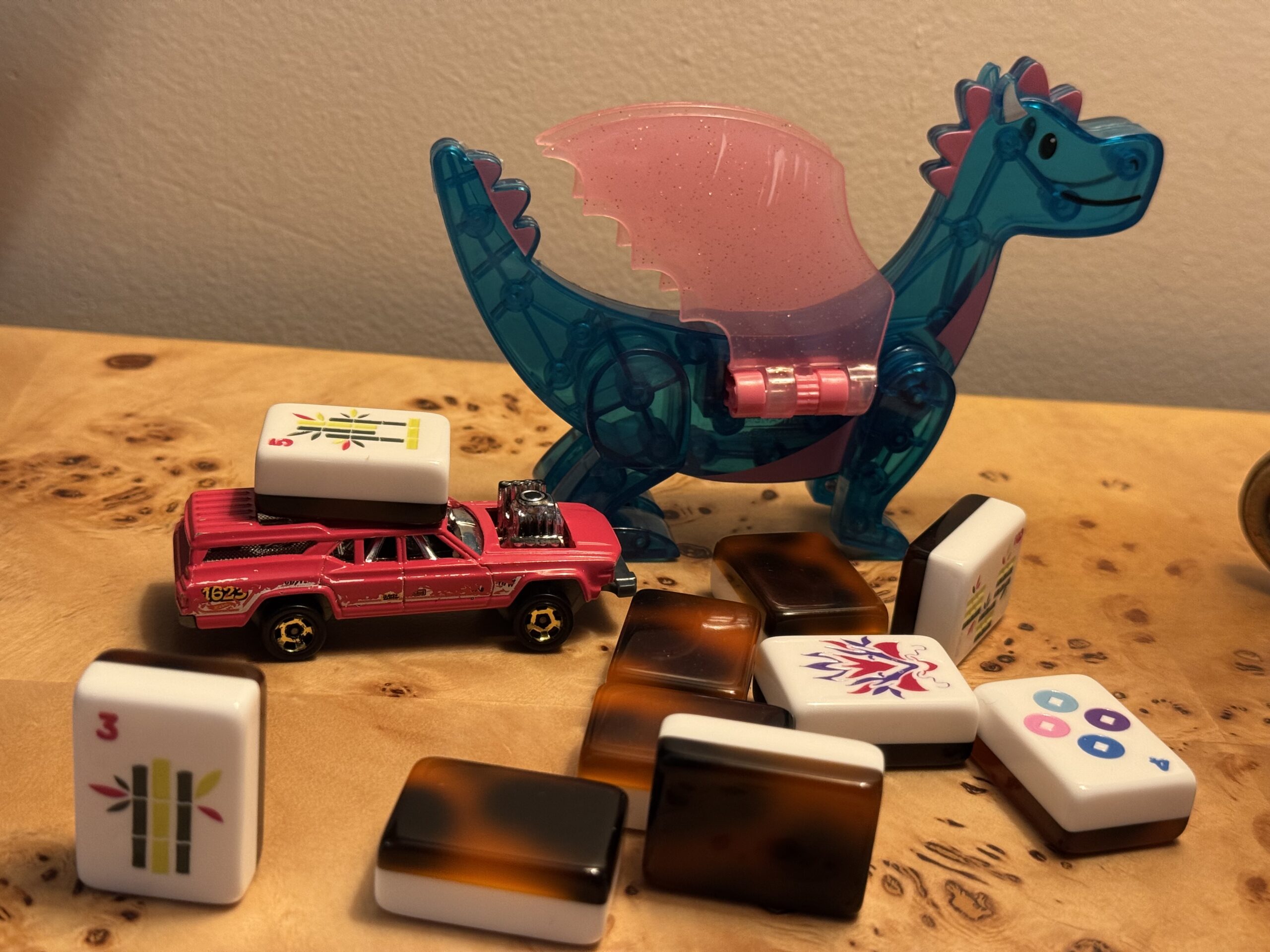
We didn’t set out to teach the kids mahjong so much as they kept hovering around the table until it was easier to pull up a chair than shoo them off. What’s actually surprised us is how fast that turned into its own thing: a game they want to get better at on their own terms.
Scroll to the bottom for the full list of everything we recommend in this guide.
Why it’s actually worth the effort.
The obvious draw is the one every parent already knows: an hour at the mahjong table is an hour not spent on a screen, and there’s something specifically satisfying about watching a kid concentrate on something, the same focused quiet you get from a good puzzle, just with more strategy underneath it. Watching them start to read a hand, notice a pattern, and realize what a discard actually gives away to the other players is fun to witness as a parent, closer to watching a skill click than watching a game get played.
That’s not just a nice feeling, either. A study following Japanese children ages six to fifteen through a year of mahjong classes found a statistically significant increase in full-scale IQ, with the biggest gains in processing speed and verbal comprehension. Pattern recognition specifically carries over into reading (spotting the difference between similar-looking letters) and math (recognizing number patterns), and the physical handling and sorting of tiles is fine motor practice in its own right, useful on its own and, for some kids, calming. None of that needs the game to be presented as educational to work, it works because the game itself asks for exactly those skills, repeatedly, in a format kids actually want to keep doing.
Teaching them on the set you already have.
You don’t need a special product to start, and for a lot of families the regular set already on the shelf is the right place to begin. A full 13-tile hand with the Charleston and a real NMJL card is a lot to ask a kid to sit through cold, though, and trying to teach the whole thing at once is the fastest way to lose their interest before it forms.
What’s worked better for us is breaking it into pieces instead of one long lesson. Sorting tiles by suit, color, or number before any real hand gets dealt is a solid starting point on its own. It’s most of what a beginner needs to get comfortable handling the tiles, and it doesn’t require understanding a single rule yet. Giving a younger kid a supporting role next to an adult, helping decide what to discard rather than playing a full hand solo, works well too. It keeps them properly involved without the pressure of carrying their own hand before they’re ready. We like having our youngest do the discards for us: We hand them the tile, they identify and name it for the table, and discard it on the table. Keep the actual sessions short. A kid who leaves the table still wanting to play is coming back tomorrow; a kid who got dragged through forty-five minutes past the point of interest is not. If you want a reference to teach from rather than winging it off memory, a proper instructional book pays for itself the first time you’re mid-hand and can’t remember a rule.
The Complete Book of Mah Jongg by Amy Lo is a thorough one to have on hand for exactly that.
The Mini Mahjer Card is worth pairing with it too, a quick-reference tool with three levels of play from beginner to advanced hands, built to work alongside a real NMJL card rather than replace it, useful for family game night without relearning hands from scratch each time. This is made for teaching the game and works wonderfully to ease kids, and other beginners, into our game nights.
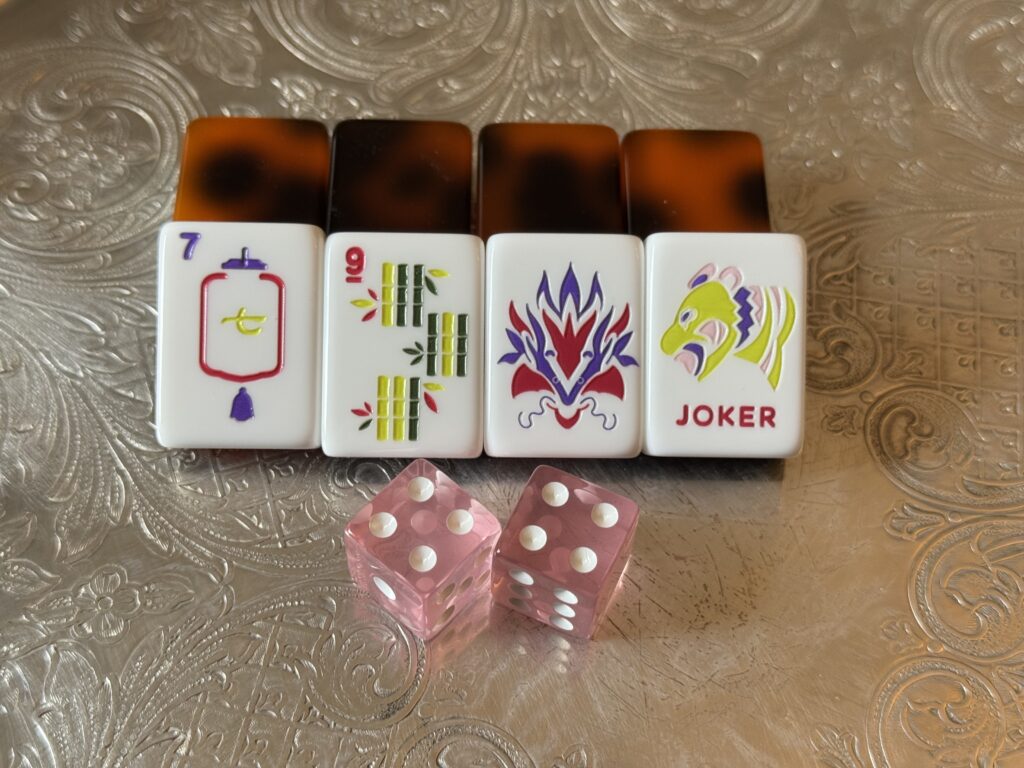
A kids’ set as the stepping stone.
If the regular set feels like too much too fast, a handful of products exist specifically to bridge the gap, and they’re worth comparing rather than just grabbing the first one that shows up in search.
Mini Mahjer (Woodlands Edition) is the one we’d point to first for a kid around six and up: simplified, shortened winning combinations across beginner, intermediate, and advanced levels, a full-size foldable board, acrylic racks, and a washable neoprene mat, all sized and paced for a kid actually learning rather than an adult who already knows the rules. ThinkFun’s Meet Mahjong takes a different approach: a 2-in-1 box pairing a simplified Chinese variant with an American-style version, built more for a family game night everyone can sit down to than a progressive path toward the real thing. It’s a reliable, well-reviewed pick if what you want is something the whole table can play, not just a kid-specific starter set. Bo & Mei’s Mahjong Together is worth knowing about too, especially for younger kids. It’s built around five levels of play that start with simple matching games and grow into full classic mahjong using lightweight pinewood tiles, though it’s sold directly through their own site rather than Amazon, so factor that into how quickly you’d want it to arrive.
None of these is the objectively correct choice over the others, they’re built for slightly different ages and slightly different kids, and the right one depends more on how your specific kid learns than on which is “best.”
Everything else that keeps the interest alive.
We’d love to say every bit of this happens tile-in-hand and screen-free, but that’s not honest. Screen time doesn’t actually hit zero in our house, and some mahjong apps genuinely deepen understanding and interest instead of just being a distraction from the real game. Not all of them are created equal, though.
Eight Bam is the one we’d start with specifically because it’s solo: an AI opponent with adjustable difficulty, no live players, no chat, nothing to supervise beyond screen time itself. It lets a kid ease in as a beginner and turn the difficulty up as they actually improve, and the bots follow the current NMJL card. I Love Mahj is another one worth knowing. It’s built specifically around American Mahjong and the same NMJL card, with real tutorials and a practice mode against bots that’s genuinely useful for drilling hands between sessions. It also offers live games against other people online, matchmaking with strangers, with built-in chat and video, and that’s the one part we wouldn’t hand a kid unsupervised. If you use it at all with a kid on the account, keep it to the bot-only practice mode and skip the live multiplayer entirely.
On the physical side, a flip-and-match version works well too: lay pairs of identical tiles face down and take turns flipping two at a time to find matches, the same basic mechanic as a memory card game. It’s a non-digital way to build tile recognition before asking a kid to read a full hand. This 3-in-1 wooden mahjong tile set doubles as exactly that plus a set of dominoes, built for the age range where full mahjong is still a reach but tile recognition isn’t, and Spin Master’s Mah Jong matching tile game is a good next step up for kids around eight and older who are ready for something with a bit more strategy than pure memory.
Once they’re ready for the real thing.
Once a kid’s actually hooked and ready to play a real hand, the same gear we’d recommend for anyone starting out still applies. A basic starter set is plenty to actually learn and keep playing on; a clear acrylic rack and pusher means little hands aren’t wrestling with a solid-color rack that hides half the tiles; and a bag charm on their own carrying case is a small, cheap way to make it feel like their set rather than a hand-me-down from the adult table. If mahjong is going to happen anywhere other than your own kitchen table, grandparents’ house, a cousin’s, a car ride to one, a portable travel set is worth having around specifically for that.
Watching them want to get better.
The part that’s actually stuck with us isn’t any single session, it’s that they keep asking to play again, and keep noticing when they read a hand better than they did the week before. That’s the real marker that this became their thing and not just an activity we scheduled for them, and it’s the whole reason to bother with any of the above.
For anyone building out a full mahjong setup around this, our full buying guide covers the rest of what’s actually worth spending on.
The full lineup
The Complete Book of Mah Jongg by Amy Lo — Check Price on Amazon →
Mini Mahjer Card, Beginner-to-Advanced Reference Tool — Check Price on Amazon →
Mini Mahjer Kids Mahjong Starter Set, Woodlands Edition — Check Price on Amazon →
ThinkFun Meet Mahjong — Check Price on Amazon →
3-in-1 Wooden Mahjong Tile Matching Game — Check Price on Amazon →
Spin Master Mah Jong Matching Tile Game — Check Price on Amazon →
American Mahjong Starter Set, Sub-$50 Option — Check Price on Amazon →
Clear Acrylic All-in-One Mahjong Rack with Pusher — Check Price on Amazon →
Mahjong Bag Charm Set — Check Price on Amazon →
Portable Travel Mahjong Set — Check Price on Amazon →