Watches
Oris ProPilot Review: Independent Swiss Watchmaking You Can Actually Reach
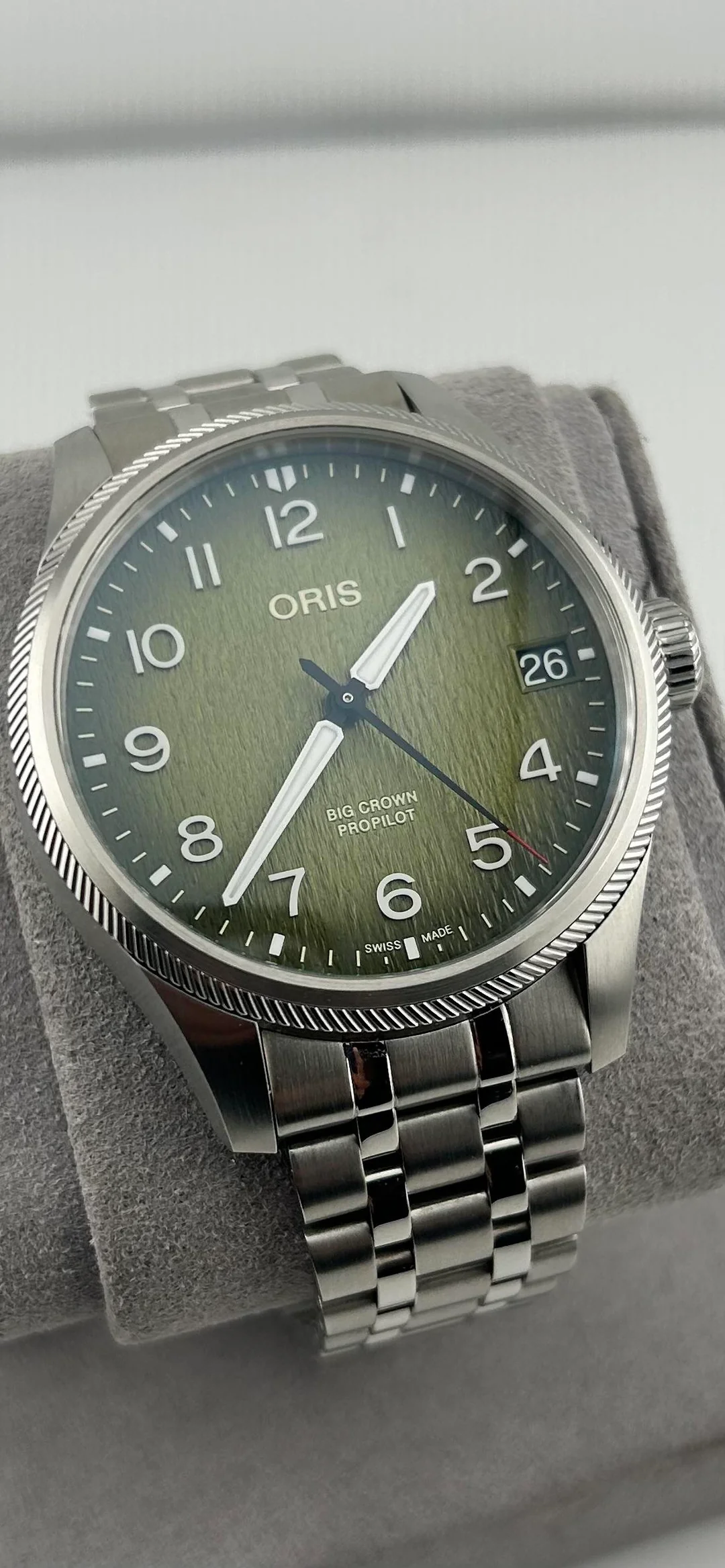
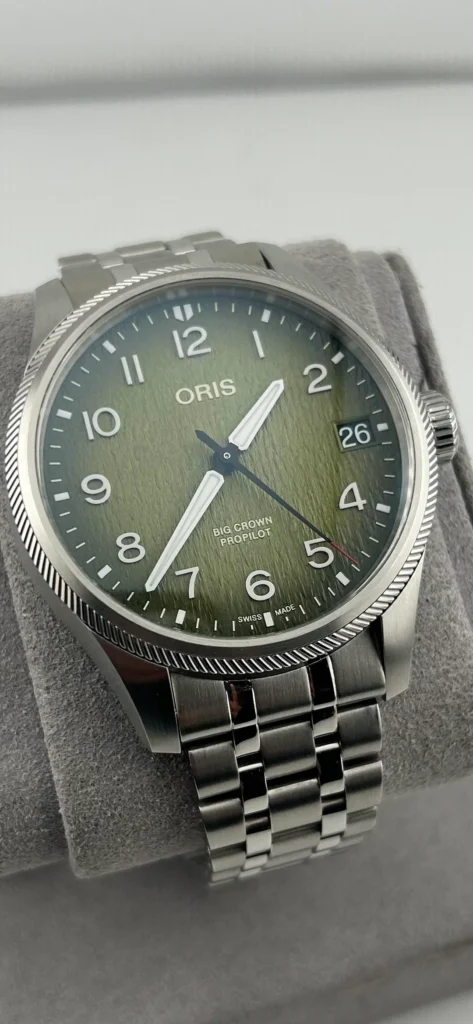
There’s a boutique near us that carries Oris on the same wall as genuinely high-luxury brands, and that placement tells you almost everything about where this watch actually sits. We spent time with a whole case of them there, everything from the standard Date model to a green dial on a leather strap to the Day Date, and none of it read like the affordable option apologizing for itself next to the expensive stuff. It’s there because it earns the shelf space on its own terms, mechanical, independently made, and priced like something you could actually decide to buy on a Tuesday rather than save toward for years.
The Oris Story.
Oris has been making watches in Hölstein, Switzerland since 1904, and it’s one of the last major Swiss brands still independent of Swatch Group, Richemont, or LVMH, the three conglomerates that own most of the recognizable names in the industry. That independence wasn’t a straight line: Oris lost it in 1970 when it got folded into ASUAG, the Swatch Group’s predecessor, and only got it back in 1982 through a management buyout led by Rolf Portmann and Ulrich Herzog. By 1992 the company had committed fully to mechanical watchmaking, no quartz, and it’s stayed focused since on four lanes: diving, aviation, culture, and motor sports. The Big Crown ProPilot line is the aviation lane, and it carries that history the way a brand does when the story is actually true rather than marketing copy.
The watch itself.
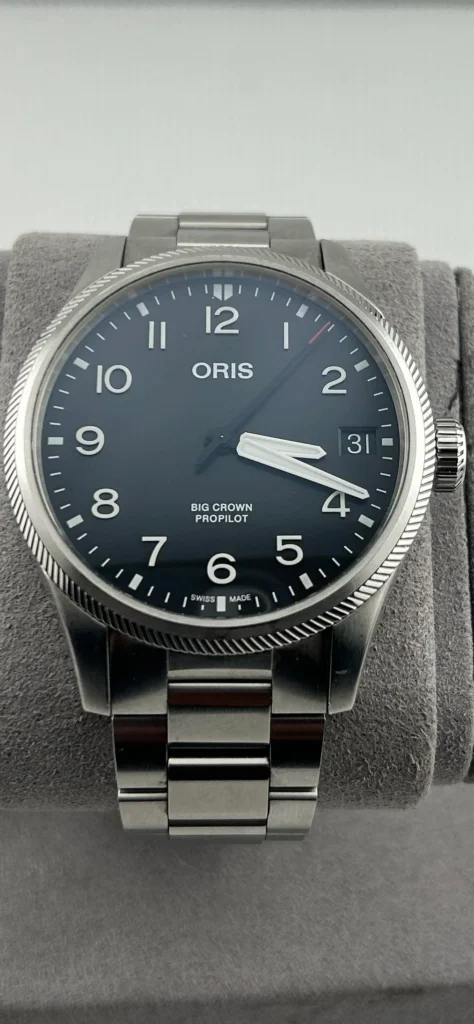
The reference we spent the most time with is the Big Crown ProPilot Date, a 41mm case that runs 11.7mm thick and 49mm lug to lug, small enough to sit under a cuff without announcing itself. The bezel has a fluted, turbine-inspired edge that’s become the visual signature of the whole ProPilot line, and the screw-in crown backs up the 100m water resistance enough that you stop thinking about it day to day. Ours had the see-through mineral caseback, which is a nice touch at this price.
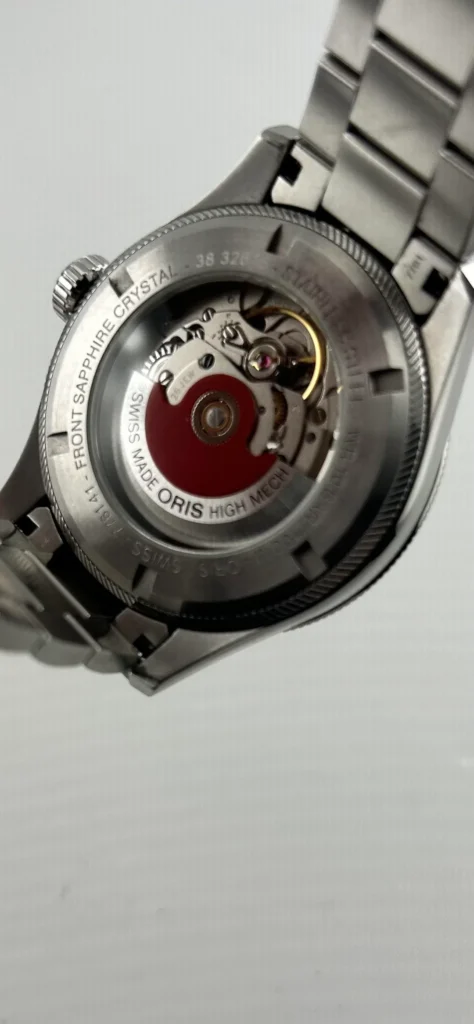
Most watches this size hide the movement behind a solid back and call it a feature. Inside is the Oris Calibre 733, Oris’s own tuning of a Sellita SW200 base, running at 28,800 vibrations per hour with a 41-hour power reserve and hacking seconds, so setting it to the second is a real option. The date sits at 3 o’clock and changes instantaneously at midnight rather than crawling, a small detail that separates a genuinely finished movement from a merely functional one. The dial comes in black, chalk, or moss, with applied Arabic numerals and enough Super-LumiNova to actually matter at night, not just look good in a press photo.
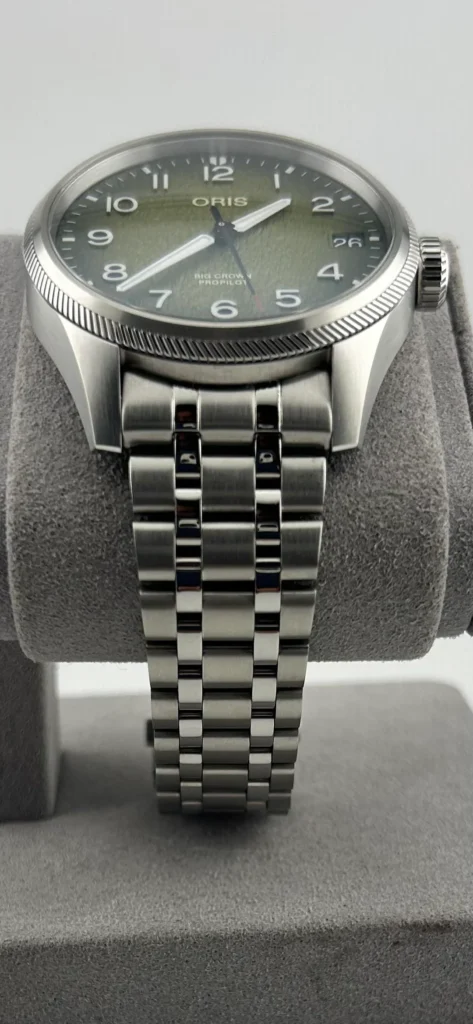
The line is also a genuine strap monster, the kind of watch enthusiasts specifically buy extra straps for. Every reference ships with quick-release spring bars: no tools required, just pull a small lever and the strap comes free, so switching from the steel bracelet to a leather strap or back takes seconds. Oris sells it from the factory on steel, leather in multiple colors, and fabric, and there’s enough of a following around swapping straps on this exact case shape that third-party strap makers build dedicated cuts for it. That versatility is part of the real case for owning one: the same watch reads dressy on black leather, sportier on steel, and different again in a green dial on a leather strap, without touching the movement or the price you already paid. Oris also builds a Day Date version into the line for anyone who wants the added complication, a slightly larger case with the day of the week alongside the date.
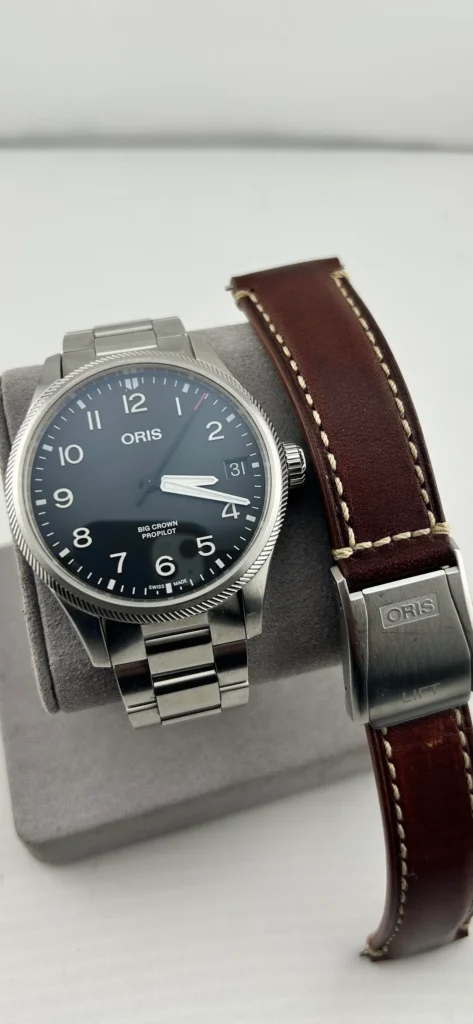
Retail runs around $2,550 on the steel bracelet.
The competition.
That price point puts it in real company. Hamilton’s Khaki Aviation Pilot Auto costs meaningfully less, around $1,150 to $1,250, and its 80-hour power reserve genuinely beats the Oris on paper, a smart choice if a long reserve is what you actually want most from a watch. What that price doesn’t get you is a movement Oris tunes and finishes in-house, or a caseback you can actually see through, the kind of details that come from a company building watches on its own terms rather than sourcing a base movement and calling it finished. Longines Spirit is the closer call, and worth being accurate about: on a steel bracelet it runs $2,550 to $2,850. Its COSC certification and silicon hairspring are real, measurable advantages, backed by one of the industry’s more capable manufacturing groups. Choosing the Oris at the same money isn’t a downgrade, it’s choosing a 120-year-old independent that answers to no one over a very good watch made by a much larger company. IWC’s Pilot’s Watch Mark XX sits in a different tier entirely, $5,800 and up, with a 5-day power reserve and an in-house movement the Oris isn’t built to match. What the Oris offers instead is genuine independent Swiss manufacture at well under half that price. The actual case for it isn’t winning any one of these on a spec sheet, it’s being the rare watch in this group still made by a company that answers only to itself, while offering a level of fit and finish that outpunches its price point.
What actually makes it a pilot watch.
Pilot watches are a storied category. The lineage runs back to Louis Cartier’s 1904 Santos-Dumont, built for an aviator who needed to check the time hands-free mid-flight. It got properly codified in the 1930s and 40s through Germany’s B-Uhr specifications: oversized cases, luminous numerals, a triangle marker at 12 for instant orientation, and an oversized crown, an actual “big crown,” sized to operate with gloves on. Oris’s whole line is named for that exact detail, and the ProPilot Date carries the rest of it honestly: Arabic numerals sized for a glance, enough Super-LumiNova to read in a dark cockpit or just a dark room, and a crown that’s genuinely easier to grip and turn than most dress-watch crowns half its size. Legibility and glove-friendly operation were the actual design brief this category solved for, not depth rating, and the Oris earns its place in that lineage on real, specific details rather than borrowed styling cues.
Where to actually look.
Both worth a closer look below. The wider catalog runs across enough case sizes, dial colors, and strap combinations that it’s worth exploring on its own to land on the specific combination you’d actually want on your wrist, and the price positioning against Hamilton, Longines, and IWC above holds true across nearly all of them.
Oris Big Crown ProPilot, Green Dial on Strap — Check Price on Amazon →
Oris Big Crown ProPilot Day Date — Check Price on Amazon →
More to come.
This is the first Oris piece here, but won’t be the last. We like this line generally enough that more of the catalog, other ProPilot references, other complications, is worth covering as we spend time with them, rather than treating this as a single verdict on the whole brand. What earns Oris the attention to begin with is the same thing that earns it a spot on that boutique wall: a watch that’s honest about what it is, priced like something you’d actually buy, and backed by a company that’s spent over a century answering to itself rather than a parent brand’s roadmap.