Sport
Mooncool Trike Review: The E-Bike for People Who Don’t Trust E-Bikes
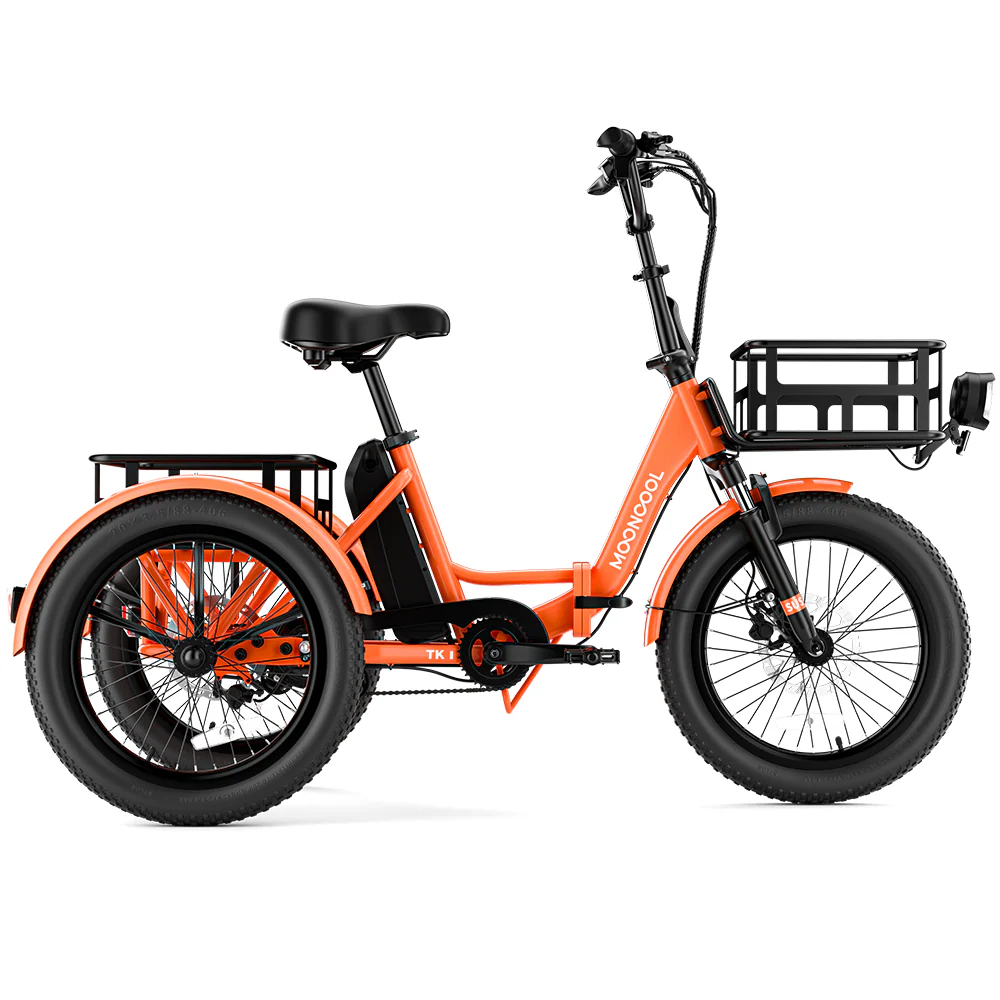
There’s a Mooncool trike that showed up parked in a driveway a few streets over, and one afternoon it was actually out and available to try. E-bikes have never really appealed. The fear of losing balance at a stop or on uneven pavement, with a motor and a battery involved, is enough to keep us off two wheels entirely. A trike solves that specific fear in a way no two-wheeled e-bike can, and a few laps around the block on this one confirmed it: it felt stable, genuinely safer than the seated e-mopeds that have started showing up on sidewalks, and fun enough to actually want to ride again.
The stability problem, actually solved.
The thing that makes e-bikes intimidating isn’t the speed, it’s the balance. Every stop sign, every slow crawl through a parking lot, every moment spent signaling a turn is a moment you’re still responsible for staying upright on two wheels. A trike removes that job entirely: three points of contact with the ground mean it’s never asking you to balance it, moving or stopped. The Mooncool TK1 backs that up with a rear differential mechanism, letting the two rear wheels spin at different speeds through a turn instead of fighting each other and making the ride feel skittish mid-corner. A low step-through frame with a 16-inch stand-over height means getting on and off doesn’t require swinging a leg over anything, and a real parking brake, not just a kickstand you lean the whole trike against, holds it upright the moment you let go. That combination is what made it feel stable and, compared to the seated e-mopeds that ride like small motorcycles, genuinely safer.
The trike itself.
Mooncool builds the TK1 around a 48V 500W helical motor with a peak output of 1092W and 65Nm of torque, enough to pull away from a stop or up a slight grade without hesitation. Top speed tops out at 15.5mph, a deliberately modest ceiling that keeps the trike in genuinely low-key, neighborhood-errand territory rather than anything trying to pass for a motorcycle. Range runs 35 to 70 miles depending on how much of the work you let the motor do versus how much you actually pedal, on a 48V 14.5Ah battery that pulls out of the frame to charge indoors instead of requiring an extension cord to the driveway. Hydraulic disc brakes handle stopping power, and a suspension front fork takes the edge off rough pavement. A 400lb load capacity and front and rear steel baskets cover an actual grocery run without a second trip. Turn signals and a horn come standard, which matter more than they sound like they would the first time a driver actually sees your blinker instead of guessing your next move.
Foldable, with real caveats.
Mooncool calls the TK1 foldable, and it is, but it’s worth being specific about what that means in practice. Folded, it comes down to about 39 by 30 by 30 inches, small enough to fit in the back of most SUVs or lean against a garage wall, but the trike itself weighs around 90 pounds. This isn’t a fold-it-up-and-carry-it-up-three-flights situation the way a compact folding bike can be. It’s a fold-it-to-fit-in-the-car-or-tuck-it-out-of-the-way situation, still genuinely useful for anyone without dedicated garage space, just not the ultralight kind the word “foldable” sometimes implies.
Where it sits against the alternatives.
The most direct comparison is Lectric’s XP Trike2, one of the more popular electric trikes on the market and the one Mooncool most often gets cross-shopped against. It starts at $1,499 for a 500W motor and 50-mile range, or $1,799 for a 750W upgrade with a 70-mile range, both genuinely more powerful on paper than the Mooncool’s setup. The Mooncool TK1 undercuts both at $1,199.99 on sale (list is $2,099.99), with a comparable 35-to-70-mile range spread of its own. The Lectric’s extra wattage is real and worth something if steep hills or heavy cargo are a regular part of the ride, but for flat neighborhood streets and grocery runs, the price gap buys more than the power difference costs. Compared to a seated e-moped, the other thing this could have been instead of a trike, the calculus is different in kind, not just degree. Those are heavier, faster, often into the 20-plus mph range, and still balanced on two wheels, exactly the category that’s drawn real scrutiny in cities like New York and San Francisco over sidewalk and bike-lane safety in the last couple of years. A trike capped at 15.5mph with three-point stability isn’t competing in that conversation at all, and for anyone whose actual hesitation is the balance-and-speed combination those mopeds represent, it isn’t really a fair fight.
Worth the fear it solves.
None of this is a review of the fastest or most powerful trike on the market. Plenty of that exists a tier up. It’s a real answer to a real hesitation: a genuinely stable way to get around the neighborhood without the balance risk that keeps a lot of people off two wheels entirely, at a price that undercuts its closest direct competitor. Fun to ride, easy to stop and start without thinking about it, and foldable enough to actually store, which for a commute-and-shop trike is most of what actually matters.
Where to actually buy it.
Mooncool TK1 Folding Electric Trike — Check Price on Amazon →
Mooncool TK1 Folding Electric Trike — Check Price at Mooncool →
A helmet worth pairing with it.
The helmet we actually wear for rides like this is the Retrospec Remi, a straightforward, no-drama pick: CPSC-certified for standard bike-helmet impact protection, an Ergo-Knob dial in back for a genuinely adjustable fit instead of guessing at foam pad thickness, 11 vents, and a hard ABS shell over removable, washable interior padding, all for under $50. It isn’t built to the newer NTA 8776 e-bike-specific standard some pricier helmets carry, but the TK1’s 15.5mph top speed sits well inside what a standard CPSC-certified helmet is rated to handle, plenty of protection for what this trike is actually capable of.
For anyone who wants that extra e-bike-specific coverage anyway, two real step-ups exist. The Giro Camden MIPS is built to the NTA 8776 standard, the e-bike-specific rating that requires more coverage and tougher drop testing than standard CPSC bike helmets, and adds a built-in rear light and closable vents. The Bern Hudson MIPS covers the same NTA 8776 ground with a lower-profile look, for anyone who wants the extra protection without it reading as sporty gear on an errand run. Either is a genuine upgrade in rated protection over the Remi, at a real difference in price.
We own a handful of bike and skate helmets at this point, worth its own full roundup soon rather than a single mention here.
Retrospec Remi Adult Bike Helmet — Check Price on Amazon →
Giro Camden MIPS Helmet — Check Price on Amazon →
Bern Hudson MIPS Helmet — Check Price on Amazon →