Mahjong
Best First Mahjong Sets
Scroll to the bottom for a comprehensive list of everything we recommend in this guide!
Mahjong has had a real moment the last couple of years, and the most common question we get from people just getting into it isn’t about strategy, it’s “which set do I actually buy.” That question has a wider range of good answers than most people expect, from a $40 Amazon starter kit to a $400 hand-painted set that looks like it belongs on a shelf, and the right one depends more on how often you’ll actually play than on how much you want to spend.
Tile material actually matters.
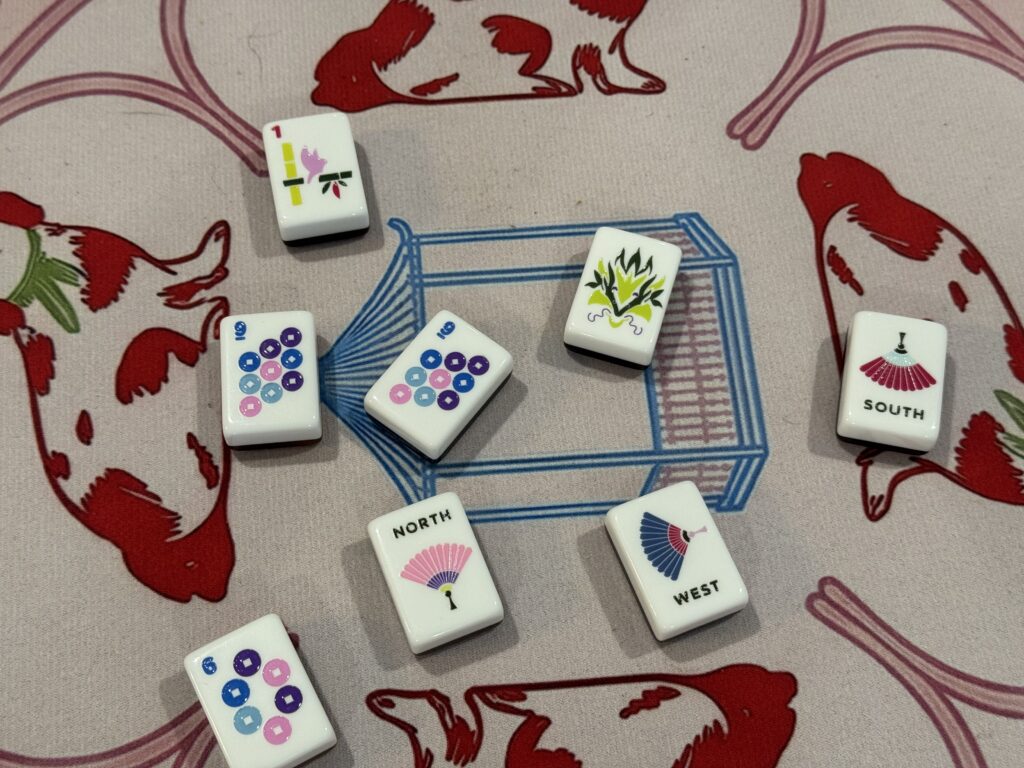
Most American mahjong sets are made from melamine, a hard plastic that can range from thin and hollow-feeling to genuinely dense and substantial depending on the grade the manufacturer uses. Cheaper sets sometimes use a lighter, more brittle plastic that chips at the corners after enough shuffling; better sets, even at a mid-range price, use a heavier melamine or acrylic that clicks satisfyingly against the table and holds up to years of weekly play. This is the single biggest quality difference between a $40 set and a $150 one, more than the artwork or the case. If you’re only buying one set, this is the spec worth paying attention to before color or pattern.
What premium buys you.
Once you get into the $300-and-up range, and sometimes well past it, brands like The Mahjong Line, Oh My Mahjong, and Bam Bird Boutique are selling something closer to a design object than a game piece, Oh My Mahjong’s collections commonly run $400 to $475, and Bam Bird Boutique’s top sets climb past $600. Ours came from a couple of these, and the difference shows up in the details: hand-finished artwork instead of a printed pattern, solid wood racks and pushers instead of plastic, and color palettes that are clearly designed rather than default. None of that changes how the game is actually played. It changes how the set feels to own and how it looks on the table when guests are over, which, for a game that’s become as much about the gathering as the gameplay, is a real part of the appeal and not just an upsell. Some of the nicest sets we’ve seen don’t even live in a closet between games, they sit out on a console table or a shelf as actual décor, which says something about how far this hobby has moved from a folding case tucked away after every session.
The middle ground.
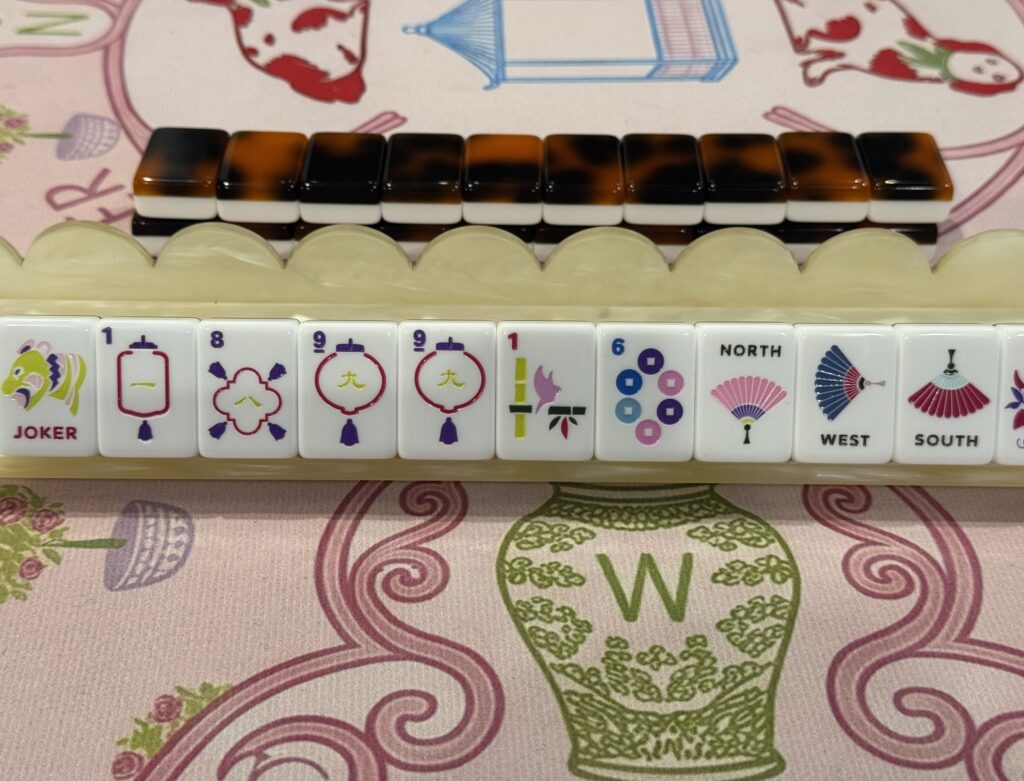
Yellow Mountain Imports and Linda Li sit a real tier below that top bracket, neither chases the same $400-plus, display-case territory the way Oh My Mahjong or Bam Bird Boutique do, and that’s exactly what makes them useful for most people. Both sell solid, genuinely well-made lines directly on Amazon: real step-ups in tile weight and design over a basic starter set, without the top tier’s price or its more precious, less travel-friendly presentation. Ours from Linda Li is a classic black set with smoky acrylic racks and pushers, striking on its own and a good canvas for pairing with a brighter, more colorful mat. The Yellow Mountain set is the more traditionally pretty of the two, a genuinely attractive full set right out of the box. Neither includes a mat, which is worth planning for separately rather than assuming it’s in the box. This is the actual sweet spot for someone who already knows mahjong is sticking around as a regular habit but doesn’t need a set built more for the shelf than the table.
Make sure it’s actually complete, tile-wise.
Before price or looks, check that the set itself has everything the game requires. American mahjong is played with 152 tiles, including 8 Jokers, dealt off a rack system, and it’s an easy thing for a bargain set to shortchange without it being obvious from the listing photos, fewer Jokers than the game actually calls for, or a piece or two missing entirely that only turns up once you’re mid-game and a Joker doesn’t show up in the wall. That’s worth confirming in the listing before checkout, not after the first missing piece shows up at someone’s kitchen table.
About the card, since it trips people up.
The National Mah Jongg League issues a new card every single year, and the catch isn’t that an old card stops working, it’s that everyone at the table has to be playing off the same card. A mismatched card at the table means agreeing in advance who’s bringing what year, or making copies ahead of time so nobody’s improvising mid-hand, and since it’s safe to assume most players default to whatever the current year is, that’s the version worth planning around. That coordination cost is likely why plenty of sets are sold without a card at all, bundling one locks a chunk of inventory to a single year’s relevance, a real, sensible reason to leave it out rather than an oversight worth penalizing a set for. Some sets do include the current year’s card, a nice convenience if the timing lines up, but plenty of the best sets on the market simply don’t, and that shouldn’t be a deciding factor on its own. What actually matters is knowing going in that you’ll need to buy the current card separately if your set doesn’t include one, and buy a new one again next year, a small, recurring cost worth factoring into the real price of playing rather than a reason to rule a set out.
The accessories that make it fun, not just functional.
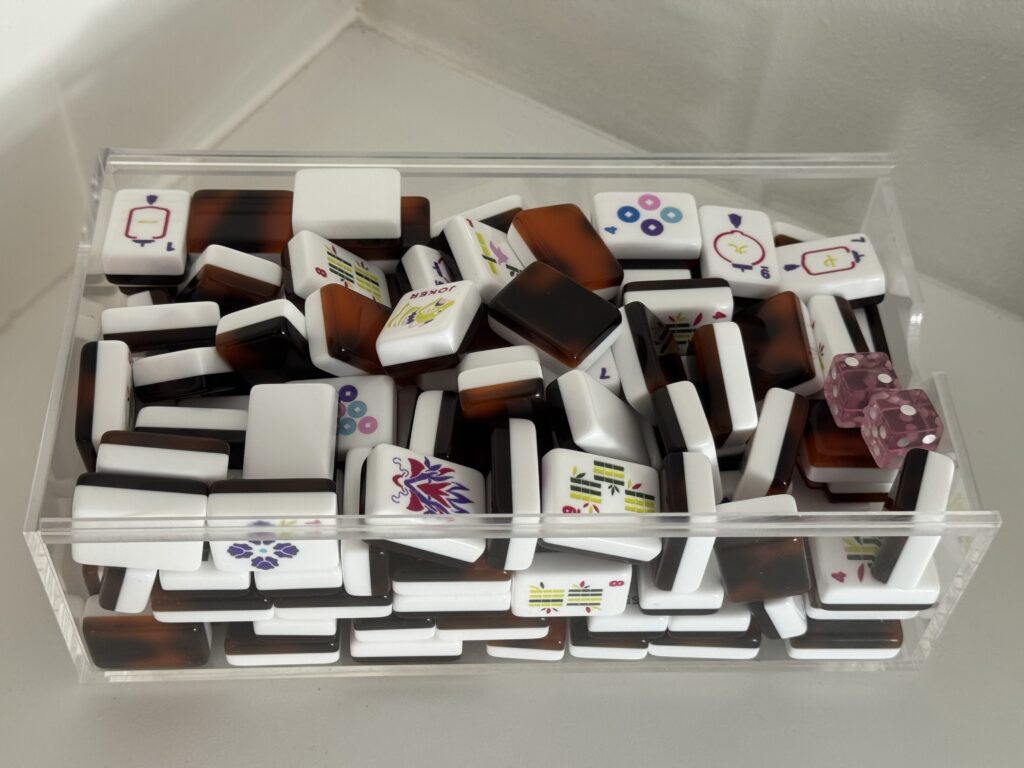
Once someone’s actually in the habit of playing weekly, the set itself tends to stop being the only thing they want to spend on. A dedicated carrying bag, swapped in for the plain case a set usually ships with, is the most common upgrade, and bag charms have become a genuine little collecting habit on top of that, the kind of small, inexpensive add-on people pick up one at a time rather than all at once, often sold in multi-piece sets, a nice way to outfit an entire club at once rather than one player at a time. Acrylic tile boxes for organizing and displaying a set on the table are another popular one, more about the ritual and the look of game day than anything the rules require. None of it changes how the game plays. All of it is part of why people who started with a $40 starter set often end up spending more on the accessories around it than they expected to.
The case matters more than it looks like it would.
Sets typically ship one of three ways: a simple zip case, a hard briefcase-style box with cut foam trays, or nothing sturdier than a shipping box meant to survive the mail and not much else. The briefcase style is what most premium sets ship in, and it genuinely protects the tiles better over years of use, but it’s also the heaviest and least practical option if the group moves between houses every week rather than staying put. A lot of regular players end up switching to a soft canvas or waxed canvas tote instead, light enough to actually want to carry. The better ones are built for the full set, not just the tiles, with a dedicated spot for the mat, genuinely the most unwieldy single piece to travel with, plus either a separate zippered tile pouch or built-in interior organization so nothing rattles loose in transit. It’s also turned into its own small personalization project on top of that: sew-on or iron-on patches shaped like mahjong tiles, or enamel pins for anyone who’d rather not sew, have become a genuinely popular way to dress up a plain bag, the same instinct as pins on a jacket or charms on a keychain, applied to a tote that’s just there to carry ceramic tiles from one house to the next. None of it affects gameplay. All of it is part of why a plain canvas bag and a few patches has become as normal a mahjong purchase as the tiles themselves.
The better ones are built for the full set, not just the tiles, with a dedicated spot for the mat, genuinely the most unwieldy single piece to travel with, plus either a separate zippered tile pouch or built-in interior organization so nothing rattles loose in transit.
The honest case for a basic set.
If you don’t yet know whether mahjong is going to be a weekly habit or a couple of tries that fade, a basic Amazon set is the right call, not a compromise. The typical budget set bundles 166 tiles, racks, pushers, dice, a current NMJL rule card, and a carrying case for well under $100, and sets like this cover everything you need to actually learn and play regularly. We’d rather see someone start here and upgrade once they know they’re actually going to keep playing than spend $300 upfront on a set that ends up in a closet after two sessions.
We’d rather see someone start here and upgrade once they know they’re actually going to keep playing than spend $300 upfront on a set that ends up in a closet after two sessions.
Racks, pushers, and the mat.
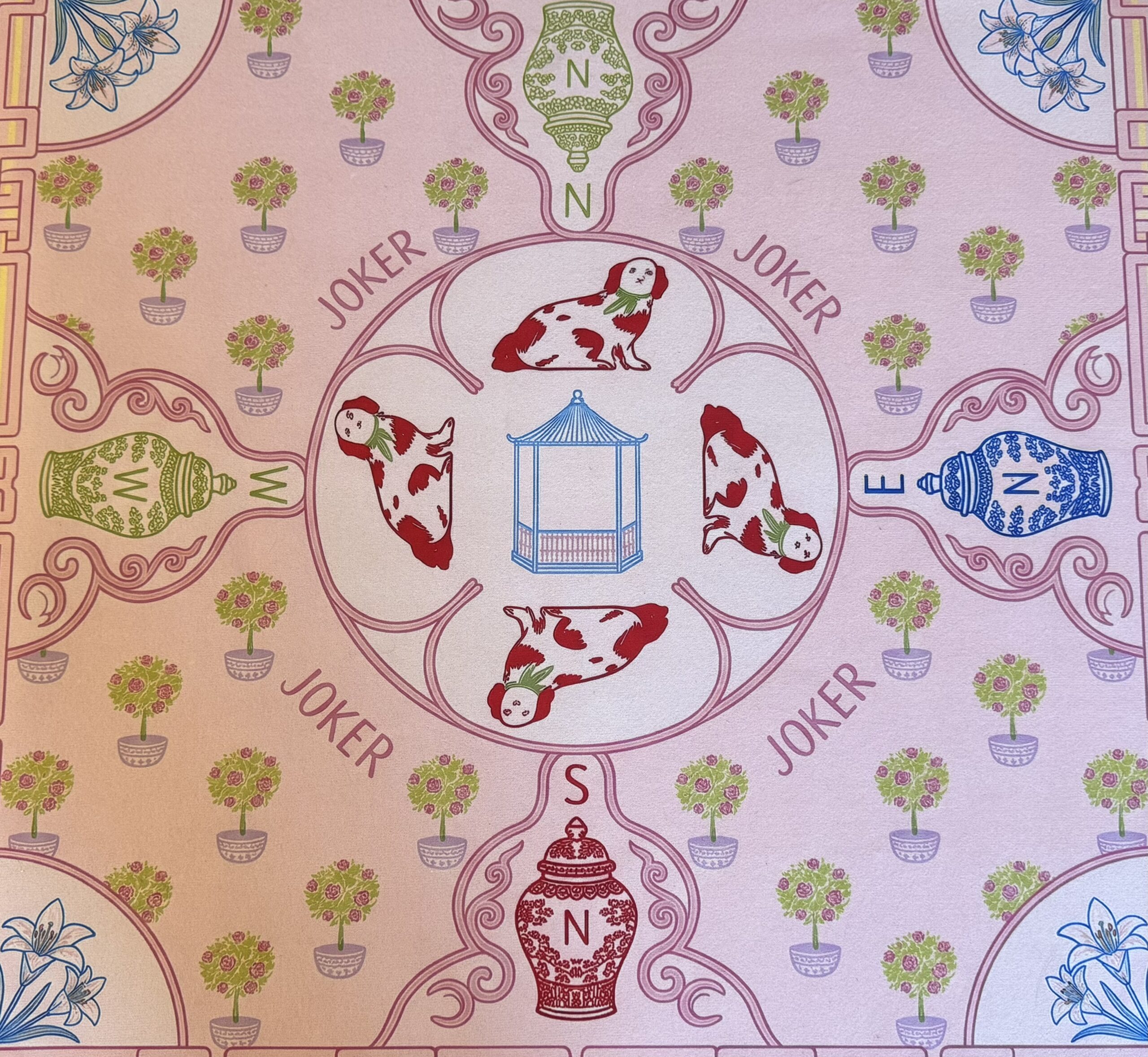
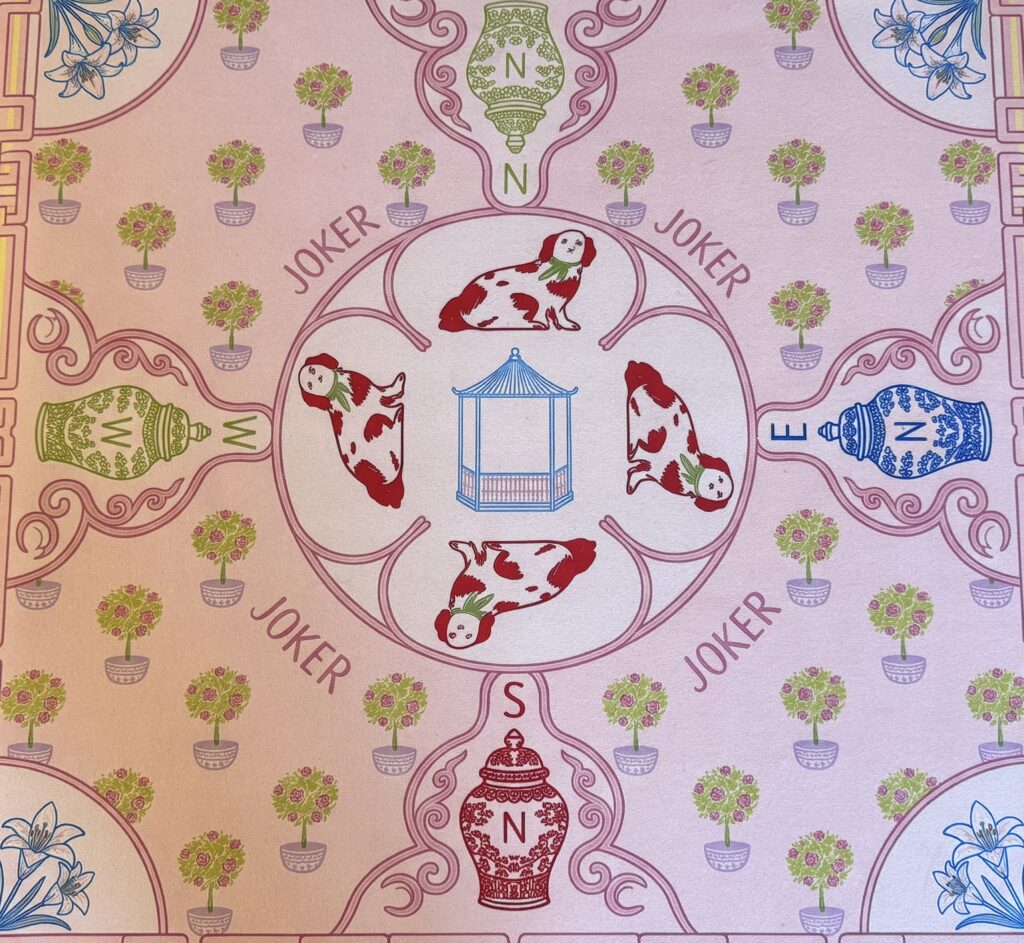
The accessory that gets skipped most often is the rack-and-pusher combo, and it’s worth not skipping. An all-in-one rack with an attached pusher means one less loose piece to lose and meaningfully less setup time each session, which matters more than it sounds like it would when you’re doing it every week. Clear acrylic is worth seeking out specifically here, beyond looking sharp on the table, it doesn’t hide the tiles the way a solid-color rack does, so whatever set you’re playing, colorful or plain, actually shows through. A mat is genuinely optional, but it does two real things: it cuts down on the clatter of tiles sliding across a bare table, and it gives you a place for wind markers and the discard area built into the printed design instead of eyeballing it. Neither is essential to actually playing the game, but both make a weekly game meaningfully more pleasant to host, and mats come in enough colors and patterns at this point that matching one to a set’s personality is part of the fun.
Buy for how often you’ll actually play.
The honest advice is the boring one: start with a solid budget set, see if it sticks, and let a premium set be the reward for a habit that’s actually formed rather than the entry fee for one that might not. Every set below plays the same game. The differences are in feel, looks, and how long the pieces last, not in what you’re actually able to do with them. One last practical note if the game is a group one: keep at least one set light and compact enough to actually travel with, since the best mahjong habits tend to move between houses, not stay tied to one table.
American Mahjong Starter Set with Racks and Pushers — Check Price on Amazon →
American Mahjong Starter Set, Alternate Option — Check Price on Amazon →
American Mahjong Starter Set, Sub-$50 Option — Check Price on Amazon →
Yellow Mountain Imports Midrange American Mahjong Set — Check Price on Amazon →
Linda Li Midrange American Mahjong Set — Check Price on Amazon →
National Mah Jongg League Current Year Card — Check Price on Amazon →
Clear Acrylic All-in-One Mahjong Rack with Pusher, Set of 4 — Check Price on Amazon →
Mahjong Table Mat — Check Price on Amazon →
Mahjong Table Mat, Alternate Option — Check Price on Amazon →
Canvas Mahjong Tile Tote Bag (Full Set, with Mat Storage) — Check Price on Amazon →
Canvas Mahjong Tile Tote Bag, Alternate Option — Check Price on Amazon →
Mahjong Bag Charm Set — Check Price on Amazon →
Mahjong Bag Charm Set, Alternate Option — Check Price on Amazon →
Acrylic Mahjong Tile Box — Check Price on Amazon →
Mahjong Tile Sew-On Patches — Check Price on Amazon →
Mahjong Tile Enamel Pins — Check Price on Amazon →
2 responses
Comments are closed.