Decor
Why Lamps Changed More in Our House Than Any Other Decor Choice
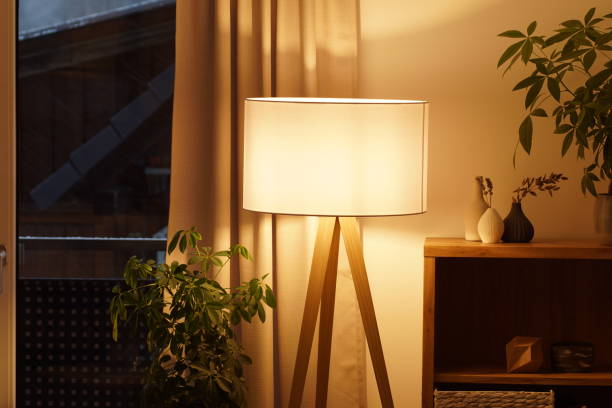
We spent a long time focused on other parts of the house, furniture, art, the things that felt like the real decisions, and relied on overhead lighting to handle the rest. It’s a common enough mistake that designers have a name for it: layered lighting, ambient, task, and accent, with overhead-only being the thing almost every lighting guide warns against. We didn’t know that when we started adding lamps, we just noticed that the rooms felt different almost immediately. Softer, more targeted, more finished. More lived in.
We’ve since put them everywhere: hallways, stair landings, our formal and informal living rooms, our kids’ playrooms. Our house has a lot of built-ins, which we love for the structure and levels they create, but those same levels throw shadows that overhead lighting alone never solved. Lamps let us place light exactly where a room actually needs it instead of flooding the whole space evenly and hoping it works.
We use Hue smart bulbs in most of them, mainly because the ecosystem is easy to live with. It means lamps in spots that would otherwise be a pain to reach, a stair landing, a high shelf, still get used every day, and it opens up a lot more than just on and off. Brightness becomes something you actually adjust for the moment, full on for a big family gathering, lamps only for a movie night, and the color range means the mood can shift without touching the lamp itself.
Lamps also do two different jobs depending on the room, and it’s worth being honest about which one you’re asking for. Right now we’re into lamps with real texture and color on the base, florals, ginger jars, the kind of piece that’s part of the room’s decor and not just a light source. A ceramic ginger jar lamp is a good example of that. In other rooms, we want the opposite: something that disappears into the space and just does its job. A simple shade, a solid-colored base, a size that doesn’t compete with anything else in the room, something like this ceramic nightstand lamp is closer to that idea, though the right blend-in lamp really depends on the room it’s going into.
Floor lamps tuck in behind furniture where a table lamp wouldn’t fit. Table lamps go almost anywhere there’s a surface. And don’t rule out battery-powered options, LED battery lamps last a lot longer than you’d expect, some still pair with a smart home setup, and going cordless means you can put light somewhere an outlet was never going to reach. This rechargeable one is a good example of how far that category has come.
If a room doesn’t have a lamp yet, put one there now, even a simple one.
Some of our favorite lamps came from antique stores and estate sales, wherever we happened to find them, and that hunt is part of the fun for us. But we wouldn’t wait on it. If a room doesn’t have a lamp yet, put one there now, even a simple one, rather than holding out for the exact piece you’ll eventually want. Lamps resell easily on marketplace apps if you upgrade later, so there’s very little downside to starting today. The light itself is the upgrade. You can change its form later.
The full lineup:
Hue smart bulbs — Check Price on Amazon →
Ceramic ginger jar lamp — Check Price on Amazon →
Ceramic nightstand lamp — Check Price on Amazon →
Rechargeable battery lamp — Check Price on Amazon →